I was asked this by a precocious, but genuinely sincere University student from Beijing at a conference a couple weeks back. I responded to him “It just is - that’s what open source is all about!” But the longer I think about it, the more I realize I was incredibly wrong.
Just because there’s no charge to you doesn’t mean it’s free. Somebody is paying for it.
In our case, it’s thousands of people, paying with their time, their expertise, their weekends, and whatever sanity they’ve got left after spending six hours hunting down bugs at work and want to put their attention into something they strongly believe in.
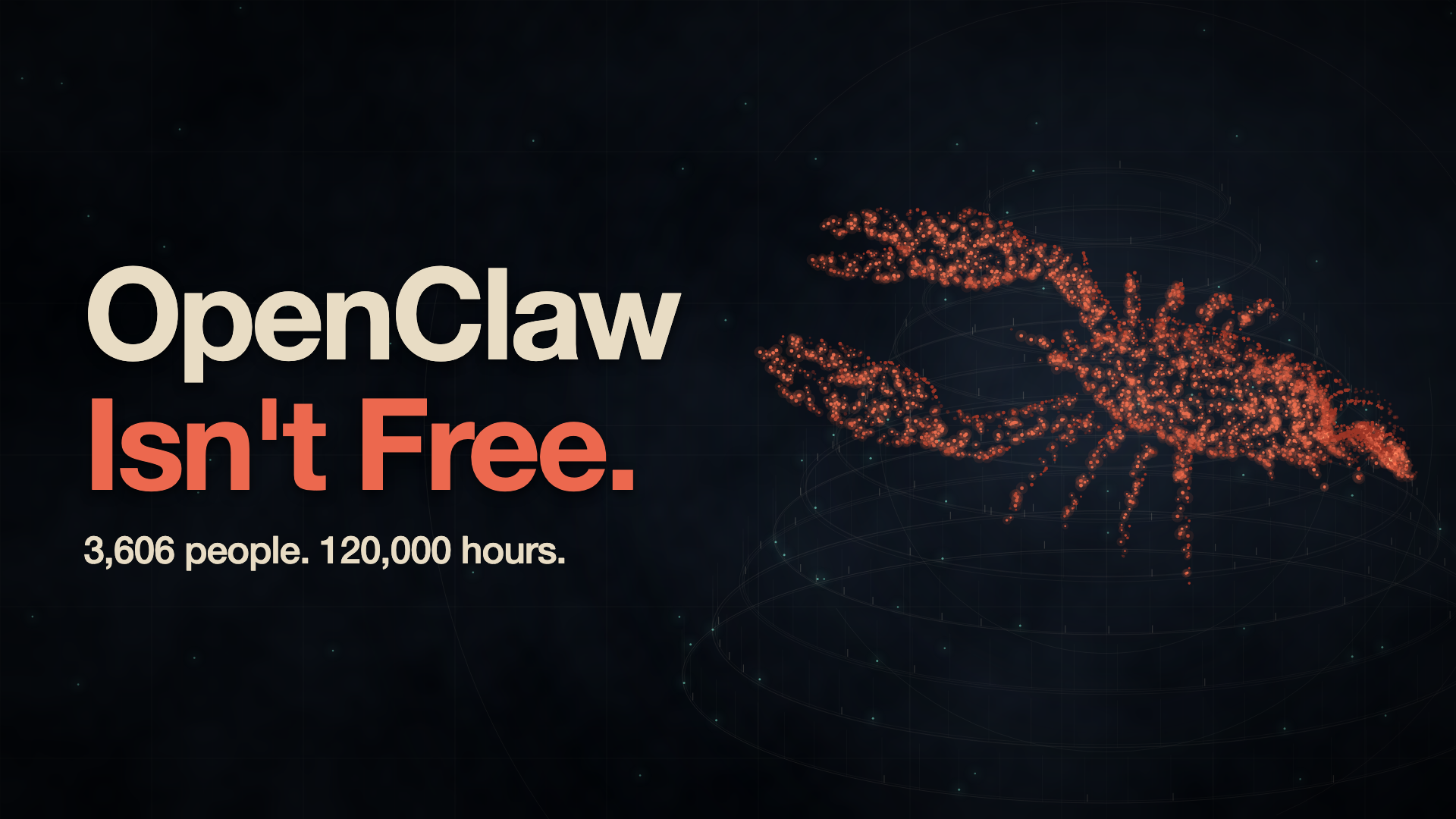
OpenClaw has 3,606 contributors. 83,000 forks. 279 releases. It is the fastest-growing project in GitHub history, and the number one most-engaged community-driven open source repo to date.
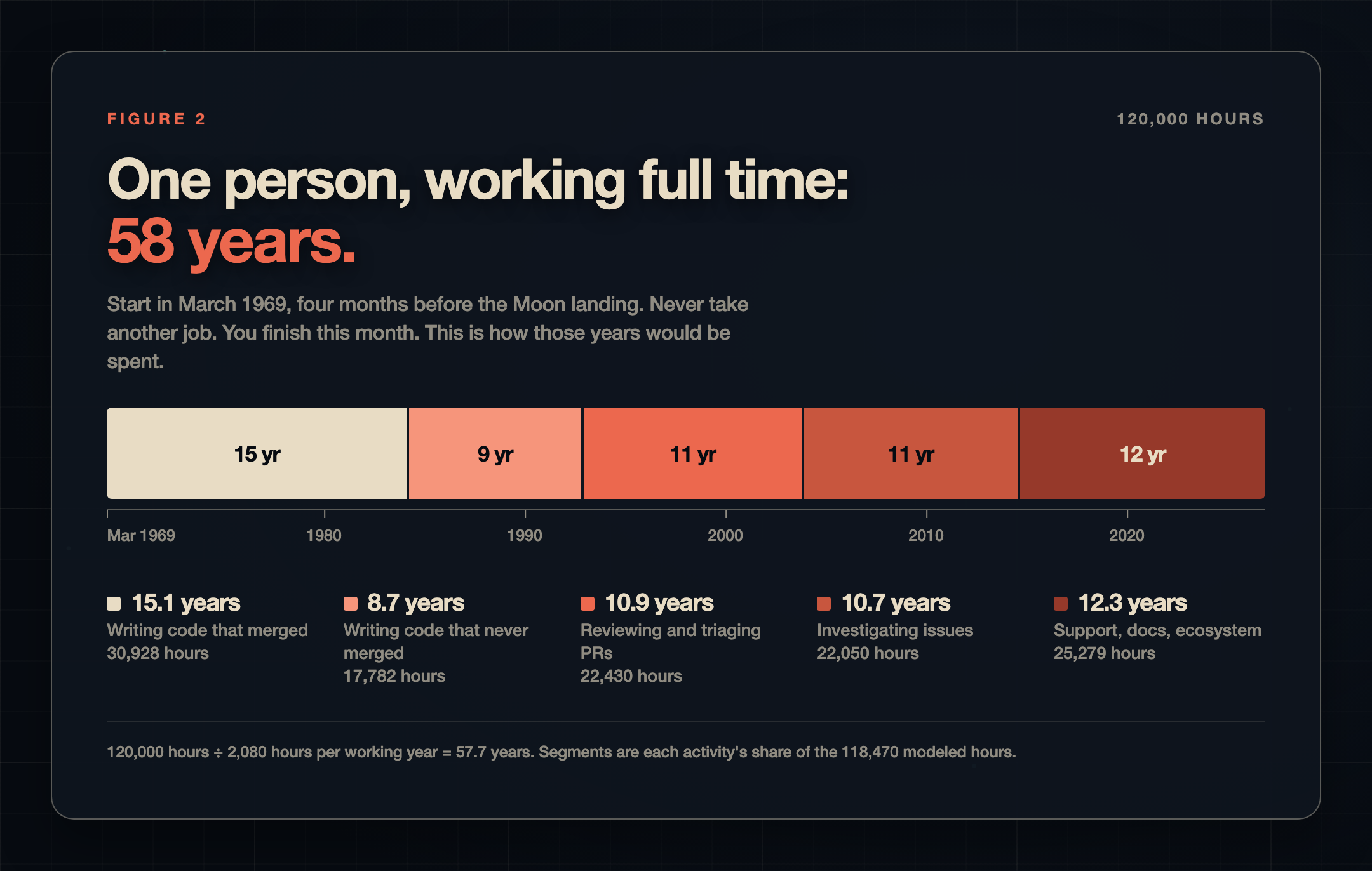
Between the development, pull requests, code reviews, bug reports, testing, troubleshooting, documentation, and everything else that goes into keeping this behemoth going, we’re estimating on the conservative end somewhere in the neighborhood of 120,000 hours of human labor.
That’s nearly 58 years of full-time work.
The work, hours, and people are very real. And I think we owe them something more than a passing acknowledgment.
OpenClaw isn’t free. This community pays for it in time and energy.
They’re toiling away at something that they believe should exist. Something they want to use, something they want other people to use, and something they believe people should have the right to own.
There’s a peculiar kind of generosity in open source. People will give away something they’ve poured hundreds of hours into, knowing full well that somebody else might take it, change it, improve it, or use it in ways they never imagined.
Good. That’s what we want!
We want you to take OpenClaw. We want you to pull it apart, tinker with it, make it do ridiculous and insane things, and put it back together in whatever configuration makes sense for you.
We want you to own it. And we have a rather serious reason for that, too.
We’re barreling headlong into a future where artificial intelligence is going to be involved in damn near everything we do. Our work, our relationships, our decisions, our memories. More and more of our lives are going to be mediated by systems that know an extraordinary amount about us.
Should a megacorporation own that, or should the user?
Imagine spending years teaching an AI assistant how you work, what you care about, who your friends are, how you think, what you’ve done, and what you’d like to do next. Then imagine having to ask permission to access any of it. Or being told the price has gone up. Or that a feature you depend on has been discontinued. Or that the company has decided you can’t take any of it with you.
We’ve already spent decades building digital lives inside other people’s walled gardens. We’ve watched platforms come and go, policies change, prices climb, and communities get tossed into the garbage because somebody with a spreadsheet decided they weren’t sufficiently profitable.
Do we really want to do that all over again with artificial intelligence? Hell no.
We want people to retain some agency over their own damn lives.
OpenClaw is one way we’re trying to preserve that agency.
We’re a nonprofit, open-source foundation. Community-driven. Community-backed. We want you to have something that you can call your own, and we want you to have a hand in deciding what it becomes. This is an effort of a crowd. Thousands of people working together because they believe the future of personal AI is worth having a say in.
And we’d like you to join us.
You don’t need to be clever. You don’t need to be prolific. You don’t need to have shipped some glorious SaaS product or delivered a monolithic internal proprietary system that took fourteen engineers and a committee of vice presidents to approve. You don’t need decades of engineering experience. You don’t need to have graduated magna cum laude. Hell, you don’t even need to know how to code.
You just need to care.
Care enough to show up. Care enough to ask questions, try things, break things, help people, or contribute whatever you’ve got to offer.
Our community needs all sorts of people. Engineers, writers, testers, tinkerers, educators, troubleshooters, artists, and people who are just curious about what the hell this stuff can do.
Some of our most valuable contributions come from people who didn’t know much of anything about OpenClaw when they arrived. They showed up. They learned. They helped somebody else learn. That’s community, and what we’re about.
No one handed us the internet fully assembled. Nobody’s going to hand us a wonderful, benevolent, user-sovereign AI future, either. We’re going to have to build the damn thing.
And if you’re sensing a streak of techno-optimism here, you’re right. AI doesn’t need to be bleak. We don’t have to accept a future where everything we do is monetized, monitored, metered, and packaged into another monthly subscription or pay-to-win. We don’t think our memories, history, and context should be held hostage by companies whose interests may someday stop aligning with our own.
We can make something better. We’ve already got thousands of people proving it.
120,000 hours. All those people, all that work, all that collective effort, poured into something that anybody can take home and make their own. Something so powerful that some random student from University might wonder what the catch is - why is it free? Why aren’t you charging?
So, here’s our ask.
Come join us. Hop into our Discord. Download OpenClaw and start puttering around with it. Get curious. Get frustrated. Find something you wish worked differently and tell us about it. Better yet, help us change it. You don’t have to be an expert. You don’t have to be extraordinary. Then swing by our forum and tell us what you named your claw!
There’s room for you here in this community that keeps growing, and for great reason.
Help us make this thing more yours.
Because we’re going into this future with our claws up, together.
Methodology:
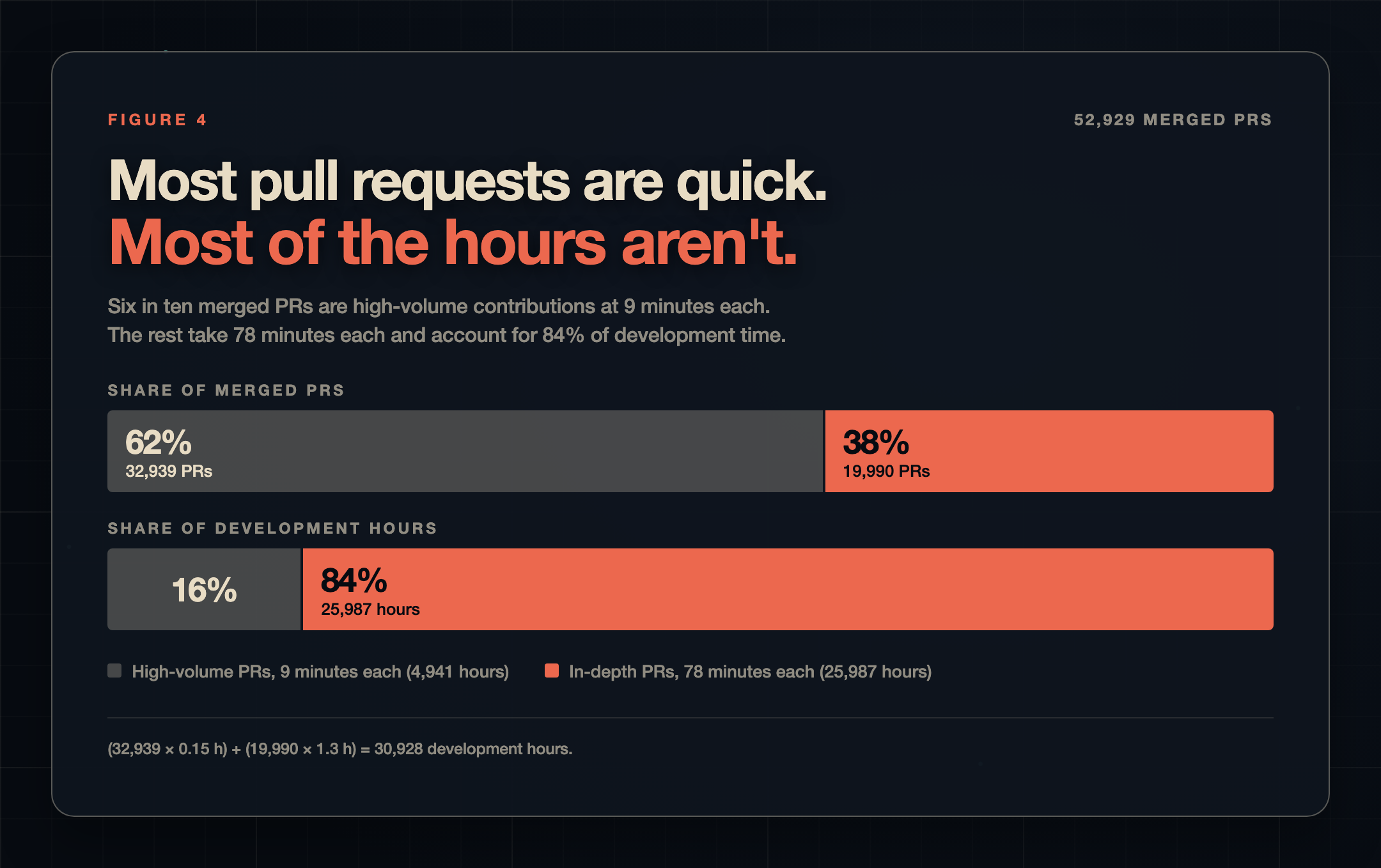
According to GitRanks, OpenClaw recorded 52,929 merged pull requests over a 12-month period. To estimate the labor involved, we referenced a 2025 METR study that tracked 16 experienced open-source developers completing 246 real development tasks, averaging approximately 2 hours per task. Accounting for OpenClaw’s unusually high development velocity and AI-assisted workflows, our model assigns 9 minutes of human effort per PR to 32,939 high-volume contributions and 78 minutes to the remaining 19,990. That’s (32,939 × 0.15) + (19,990 × 1.3) = 30,928 development hours. A 2026 peer-reviewed study observed a median code-review duration of 9 minutes, providing an external reference for estimating review effort.
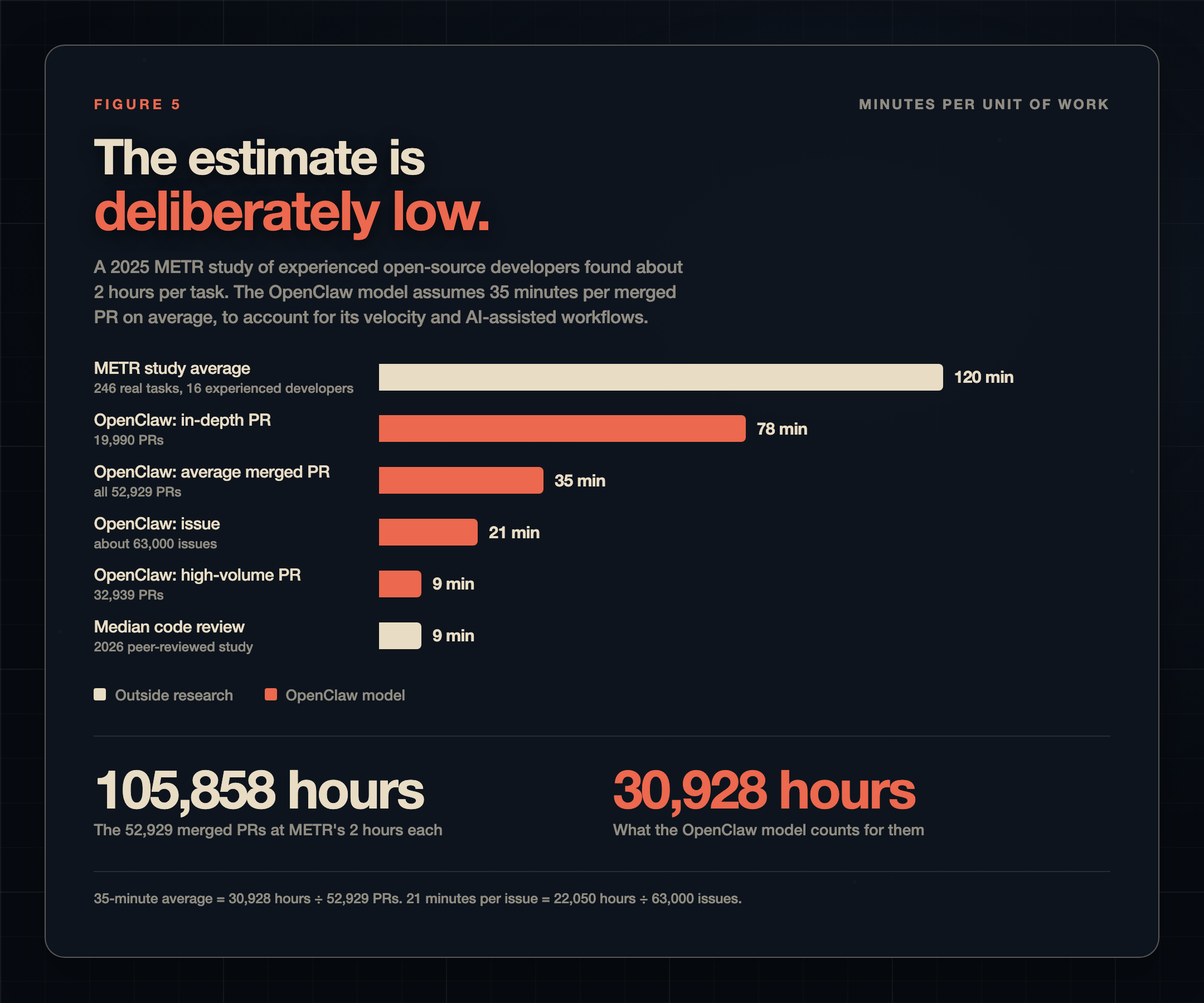
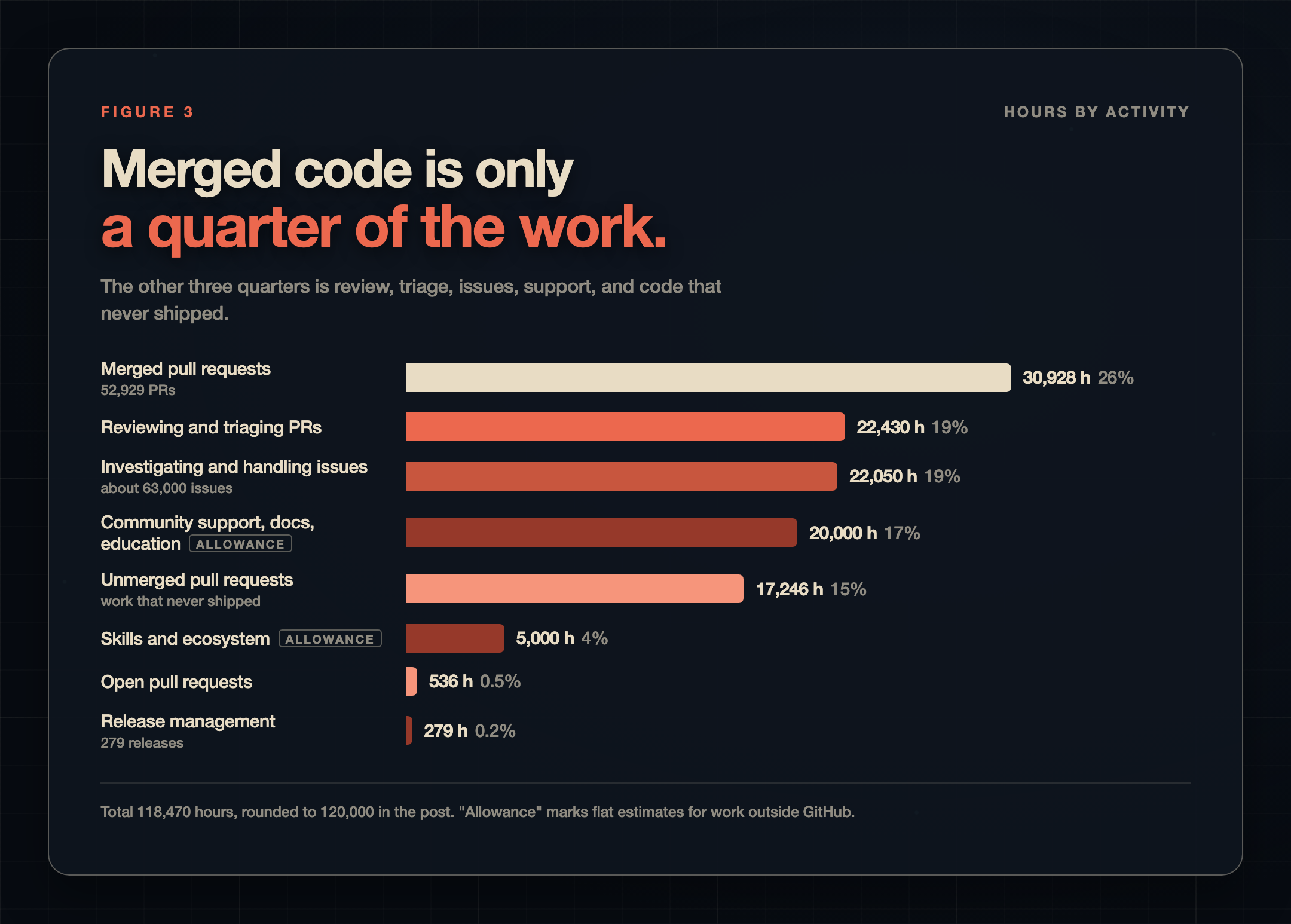
We also account for work that never makes it into a release. Our calculations estimate 17,246 hours on unmerged PRs, 536 hours on open PRs, 22,430 hours reviewing and triaging PRs, and 22,050 hours investigating and handling approximately 63,000 issues. We include allowances of 20,000 hours for community support, documentation, and education, 5,000 hours for skills and ecosystem development, and 279 hours for release management. Combined with the 30,928 development hours, that produces approximately 118,470 human-hours, rounded to 120,000, or nearly 58 years of full-time labor. The activity counts come from public project data; the hours per activity and work outside GitHub are modeled assumptions, not recorded timesheets.